
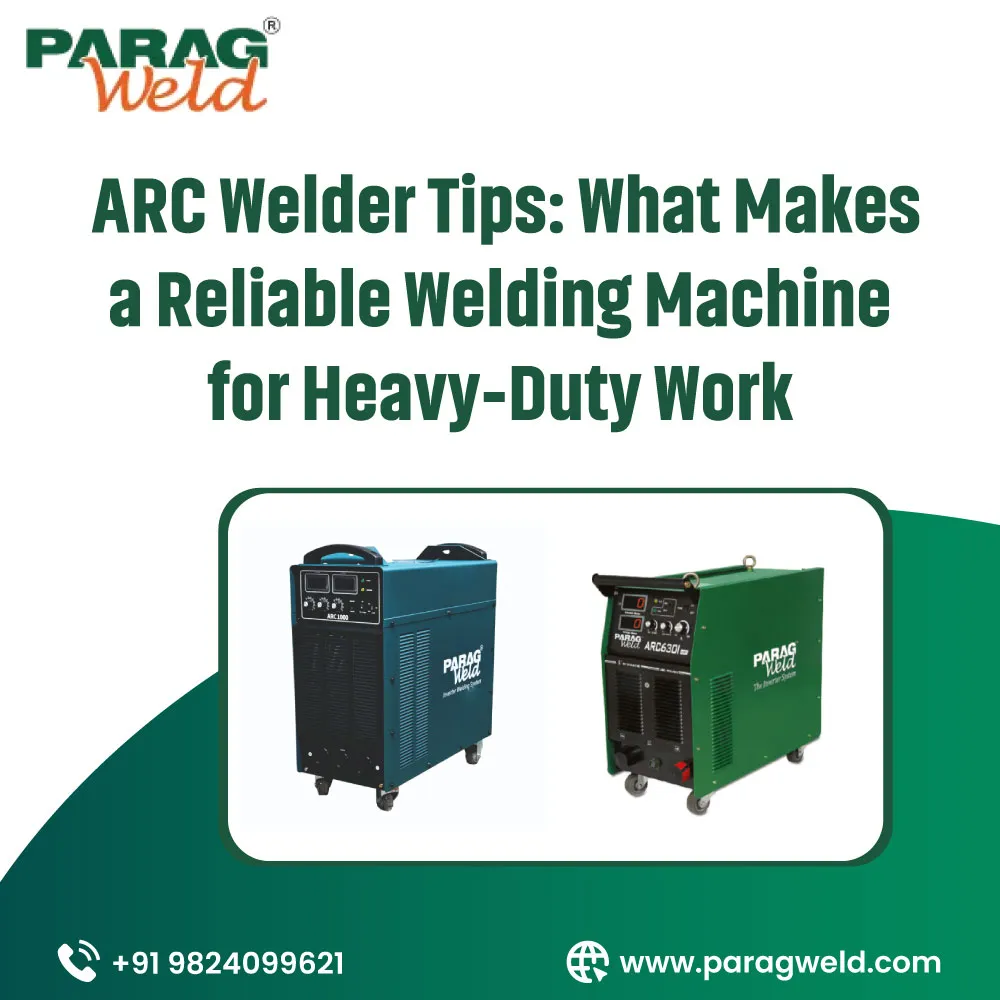
Heavy-duty welding requires power, stability, and a machine that can operate for long hours without fluctuating or overheating. Whether you work in fabrication, construction, manufacturing, or industrial repair, having a reliable ARC welder transforms the quality of your welds and the productivity of your workflow. With advanced technologies and intelligent welding systems entering the market, choosing the right welding machine has become more important than ever.
What Is an ARC Welding Machine?
An ARC welder is a device that uses electricity to create an arc between an electrode and base metal. This arc generates the heat required to melt metals and join them permanently. ARC welding is widely used due to its versatility, low cost, and compatibility with various metals.
The performance of an ARC welder depends heavily on:
- Arc stability
- Power capacity
- Duty cycle
- Electrode compatibility
- Thermal management
- Internal components and technology
Key Features That Make an ARC Welder Reliable for Heavy-Duty Work
High Duty Cycle for Continuous Welding
The duty cycle indicates the amount of time a welder can work non-stop before it must cool down. Heavy-duty welding demands a machine with:
- 60% to 100% duty cycle
- High amperage stability
- Minimal overheating
Machines with low duty cycles interrupt workflow and reduce productivity. Industrial-grade welders prioritize consistent output even during long welding sessions.
Stable Arc Performance
For heavy work, arc stability is everything. A stable arc:
- Reduces spatter
- Improves weld penetration
- Help create smooth, uniform beads
- Lowers electrode wastage
Strong Thermal Management System
Heat buildup is the biggest enemy of ARC welders. Reliable machines use:
- Powerful cooling fans
- Heat-resistant components
- Thermal overload protection
- Ventilation channels
Compatibility with Heavy Electrodes
Heavy-duty applications require electrodes such as:
- 6013
- 7018
- 6011
- High-penetration industrial electrodes
A trustworthy ARC machine should support a wide range of electrode types and sizes. This flexibility allows welders to perform structural welding, fabrication, maintenance, and fieldwork without limitations.
High Amperage Output
Heavy-duty welding often requires amperage ranges between:
- 200A to 400A for industrial welding
- 160A to 250A for fabrication and workshop welding
Rugged Build Quality
Industrial welding machines operate in rough environments—dust, heat, vibration, heavy load, and unpredictable conditions. The welder must have:
- Strong metal casing
- Dust-protected vents
- Corrosion-resistant body
- Reinforced internal wiring
Inverter Technology for Efficiency
Modern ARC welders use IGBT inverter technology to offer:
- Lightweight design
- Faster arc response
- Lower electricity consumption
- More precise weld control
Easy Portability for On-Site Work
Heavy-duty welding doesn’t always happen inside workshops. Portable ARC welders are crucial for:
- Construction sites
- Pipeline welding
- Machinery repair
- Automotive work
Voltage Protection Features
Reliable welders have:
- Surge protection
- Input voltage stabilization
- Overload cut-off
- Short-circuit protection
User-Friendly Controls
A reliable ARC welding machine provides:
- Digital display
- Smooth amperage adjustment
- Intuitive control panel
- Easy operation for beginners and professionals
How to Choose the Right ARC Welder for Your Work
Identify Your Metal Type
Different materials require different output capabilities.
For example:
- Mild steel → medium amperage
- Stainless steel → stable arc
- Cast iron → high penetration
Decide the Welding Thickness
Thicker metals need higher amperage. If your daily work involves heavy plates, choose a machine with a high output range.
Consider Industrial vs. Workshop Usage
Workshop welding machines differ from industrial ones. Industrial welders prioritize:
- High duty cycle
- Portability
- Thermal stability
- Heavy-electrode support
Check Power Availability
Depending on your location, power sources may vary:
- 220V
- 415V
- Single-phase
- Three-phase
Verify Brand Credibility
A trustworthy manufacturer provides:
- Tested machines
- Long-lasting results
- Consistent arc performance
- Technical support
Why Choose Us
Selecting Parag Electrodes Agencies Pvt. Ltd. means choosing advanced welding technology built with precision, industrial strength, and performance reliability. Our ARC welders are engineered for heavy-duty operations and crafted with high-grade components that deliver powerful output and stable arcs. As a well-known bold ARC Welding Machine Manufacturer in India, we focus on creating machines that match the needs of fabricators, manufacturers, construction companies, and industrial workshops. Our products are designed with durable builds, refined inverter technology, and safety-driven engineering to support long hours of consistent welding. With decades of expertise in the welding industry, we are dedicated to offering machines that help professionals achieve stronger, cleaner, and more dependable welds.
Conclusion
Choosing the right ARC welding machine for heavy-duty applications requires understanding key performance features such as duty cycle, arc stability, electrode compatibility, and thermal control. An efficient welder improves productivity, weld quality, and long-term operational reliability. Industrial welders must meet demanding conditions, making durability and technological refinement essential. This is why many professionals prefer welding solutions from Parag Electrodes Agencies Pvt. Ltd., known for high-performance ARC welders built for industrial workloads. With the right machine, welders gain the power, consistency, and control needed to complete complex and heavy welding tasks with confidence and precision.
For expert guidance on choosing the ARC welder call +91 98240 99621 or email info@paragweld.com for professional assistance.
Key Takeaways
- High Duty Cycle is Essential – Heavy-duty welding requires machines that can operate continuously without overheating. Industrial-grade ARC welders with 60–100% duty cycles ensure consistent output and uninterrupted workflow.
- Arc Stability and Amperage Control – Stable arcs reduce spatter, improve penetration, and produce smooth weld beads. Machines with adjustable high amperage (160–400A) support a variety of metals and thicknesses for industrial and fabrication work.
- Durable Build and Thermal Management – Reliable welders feature rugged casings, dust-protected vents, corrosion-resistant bodies, and strong cooling systems with thermal overload protection to withstand harsh industrial environments.
- Electrode Compatibility and Versatility – Heavy-duty welders should support a wide range of electrodes (6011, 6013, 7018, etc.) for applications in fabrication, structural work, and maintenance. Inverter technology enhances precision and efficiency.
- Portability and User-Friendly Features – Industrial welders with lightweight designs, intuitive controls, voltage protection, and digital displays allow professionals to work efficiently on-site, whether in construction, automotive, or machinery repair.