Ten Questions to Answer Before You Buy
-
Which metal will I weld most often?
Structural fabricators work mainly with mild steel sections and plate, so MMA or MIG is the foundation. Food-processing and dairy equipment makers in Malanpur and Banmore work largely in stainless steel, where TIG produces the clean, crevice-free bead that hygienic equipment needs. If aluminium is on the list, choose an AC/DC TIG machine.
-
What thickness range is typical?
Stainless sheet of 1–3 mm needs smooth low-current control; beams and base plates of 10 mm and above need enough amperage to complete multi-pass joints without the machine running out of breath. Write down both ends of your range and check that one machine covers them, or plan for two.
-
What power supply do I have?
Units in the industrial areas usually have a three-phase 415 V connection, which suits heavy-duty inverters and large MIG sets. Small workshops on single-phase should pick a machine built for it. Ask how the machine tolerates voltage fluctuation and whether it runs reliably on a generator for site jobs.
-
How long will the arc be on each day?
Duty cycle, the share of a ten-minute period a machine can weld at a given current, decides whether it keeps pace with a full shift. A structural yard running continuous fillet welds needs a far higher duty cycle at working current than a maintenance shop that welds in short bursts.
-
Will I weld in the shop, on site, or both?
Erecting sheds, warehouses and factory buildings around Gwalior involves a lot of site welding. There, a portable MMA inverter is more practical than a MIG set with gas cylinders. Inside the shop, MIG is faster.
-
Does the job require a specific weld quality or procedure?
Pressure parts, food-contact equipment and some structural work are inspected against a specification. Choose a machine with stable output and precise parameter control, and use consumables with a known classification.
-
How will I cut and prepare the material?
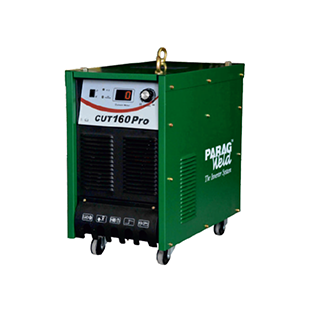
Good welds start with good fit-up. An air plasma cutter speeds up profile cutting and bevelling; for repeated profiles from plate, price a CNC plasma or flame cutting system alongside the welding machines.
-
Which consumables will the machine use, and can I source them easily?
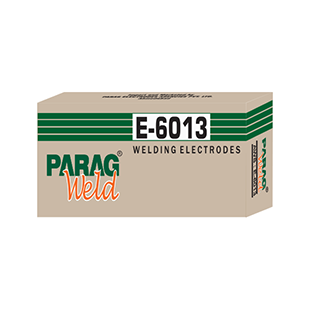
Check the wire diameters the MIG feeder accepts, the electrode sizes the MMA machine can burn comfortably, and the torch spares for TIG and plasma. Buying consumables from the same manufacturer keeps compatibility simple.
-
What support will I get after purchase?
Ask how you will get help with settings, error indications and spare parts. Remote support by phone and WhatsApp resolves many issues quickly when the supplier's team knows the machine well.
-
Will this machine still fit if my work grows?
If you expect to move from repair jobs into batch fabrication, a slightly larger three-phase machine today can save a second purchase next year.
Shortlist from the Paragweld Range
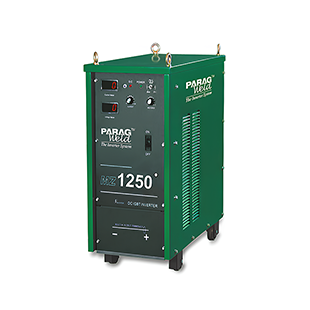
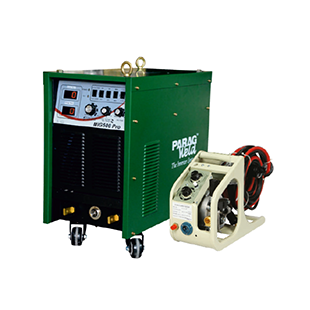
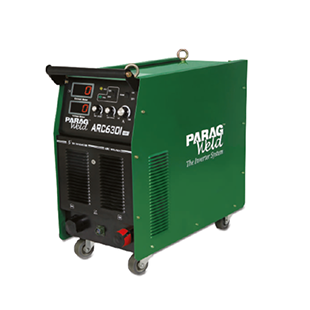
With your answers in hand, use these product families to narrow down the models worth comparing:
How Your Answers Point to a Machine
Structural steel fabrication
Mild steel, medium to thick sections, long shifts: a three-phase machine from the MIG welder series for the shop, and an ARC inverter for erection work. For long girder and plate seams, consider submerged arc welding.
Food-processing and dairy equipment
Stainless sheet and pipe, visible welds and hygiene requirements: a DC TIG or a pulse TIG machine, which controls heat input on thin stainless and reduces discolouration, together with a plasma cutter for sheet profiles.
General engineering units
Mixed jobs and thicknesses: one MIG, one MMA inverter and one air plasma cutter cover most orders in a general engineering shop, with TIG added when stainless work turns regular.
Mistakes Gwalior Buyers Can Avoid
- Choosing on maximum amperage alone and ignoring duty cycle at the current you actually use.
- Buying a single-phase machine for heavy work because the premises have not yet been upgraded.
- Using MIG outdoors in wind, where the gas shield blows away and porosity follows.
- Leaving cutting and edge preparation out of the budget.
- Ignoring consumable storage; damp electrodes undo the benefit of a good machine.
Talk to Paragweld Before You Order
Share your checklist answers with the Paragweld team and they will recommend a suitable machine and consumables. Paragweld dispatches equipment to Gwalior from its Ahmedabad factory and supports buyers by phone and WhatsApp with setup, parameter guidance and spares. See every model on the products page or write to us through the contact page.
Checklist ready? Call us at +91 9824099621 or email us at paragltd@yahoo.co.in to discuss the right welding machine for your Gwalior unit.