Problem 1: Cracking in Thick and Alloy Steel
Where it appears: heavy sections and high-strength steels used in defence vehicles and structures, and repair welds on hard, worn mineral-processing parts.
Why it happens: hydrogen from moisture in electrodes or flux, combined with a hard heat-affected zone and high restraint, causes cold cracking, sometimes hours after the weld is finished. Hot cracking can follow from a poor bead shape or a contaminated joint.
How to fix it:
- Use low-hydrogen electrodes and keep them dry in an oven or holding container; re-bake any that have been exposed.
- Preheat thick or hardenable steel and hold the interpass temperature the procedure calls for.
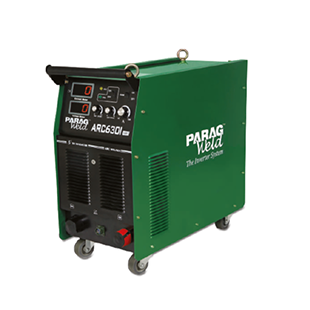
- Use a machine with stable output at both low and high current, such as a heavy-duty inverter from the Paragweld ARC series, so the welder can hold a steady arc on root and fill passes.
Problem 2: Distortion on Large Fabrications
Where it appears: hulls, frames, carriages and long structural members where many passes pile heat into one side of the job.
Why it happens: uneven heating and shrinkage pull the part out of shape, and slow, high-heat-input welding makes it worse.
How to fix it:
- Balance the weld sequence on both sides of the neutral axis and use back-step or skip welding on long seams.
- Move high-volume joints to MIG or submerged arc welding, which deposit metal faster so fewer passes and less total heat go into the part.
- Use fixtures, welding rotators and a column & boom to restrain the job and keep welding in the flat position.
Problem 3: Porosity
Where it appears: MIG welds made in open, draughty sheds; stick welds made with damp electrodes; welds on oily or rusty plate.
Why it happens: gas gets trapped in the solidifying metal because of lost shielding, moisture or surface contamination.
How to fix it:
- Grind the joint to bright metal and remove oil, paint and mill scale.
- Check gas flow, hoses and nozzle condition, and screen MIG stations from fans and open doors.
- Use dry electrodes and consistent, clean welding wire.
- For site work in wind, switch to MMA instead of fighting the gas shield.
Machines and Consumables Mentioned on This Page
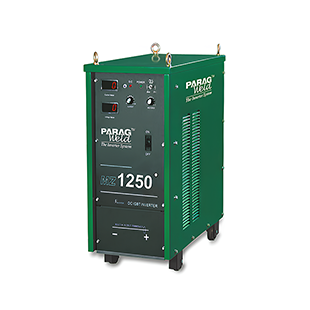
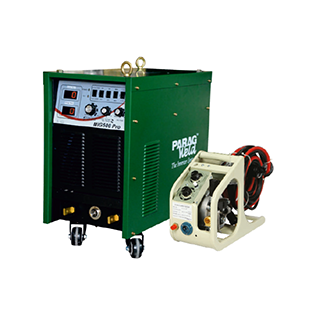
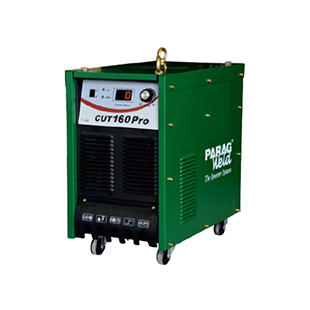
These Paragweld product families match the fixes described above and below:
Problem 4: Excess Spatter and Rework
Where it appears: production MIG welding of brackets, frames and panels, where every spatter ball means grinding before painting or inspection.
Why it happens: a poor balance of voltage and wire speed, a loose or distant earth clamp, unsuitable gas, or an ageing machine with unstable output.
How to fix it: set parameters for the wire and gas actually in use, fix a clean, tight earth close to the joint, and use an inverter MIG with good arc control such as the Paragweld MIG 500 Pro. Anti-spatter spray keeps nozzles and fixtures clean.
Problem 5: Overheating Machines and Torches
Where it appears: long, high-current runs on thick plate in multi-shift production, especially through Jabalpur's hot summer months when temperatures inside sheds climb.
Why it happens: operating above the machine's rated duty cycle, blocked cooling vents, or air-cooled torches pushed beyond their capacity.
How to fix it:
- Size machines by duty cycle at your working current, not by peak amperage.
- Add a water cooling unit for TIG and high-amperage MIG torches.
- Blow dust out of machine vents on a schedule; this matters even more near limestone and mineral processing, where fine dust is constant.
Problem 6: Rapid Wear on Mineral-Handling Equipment
Where it appears: crusher parts, chutes, buckets and screens used in limestone and mineral handling around the city.
Why it happens: abrasion from rock and dust wears ordinary mild steel weld metal away quickly.
How to fix it: rebuild worn areas with suitable hardfacing electrodes on an MMA machine, lay a buffer layer where the base metal requires it, and cut replacement liners cleanly with an air plasma cutter.
Prevention Starts Before the Arc
Most of these defects share the same roots: poor joint preparation, damp consumables, wrong parameters and machines running beyond their rating. A routine of cleaning joints, storing consumables properly, recording settings that work and servicing machines on schedule prevents more rejections than any single piece of equipment.
Help from Paragweld for Jabalpur Fabricators
If a recurring defect is costing you rework, describe it to the Paragweld team with photos, the material, thickness and current settings. They can suggest parameter changes, a better-suited consumable or a machine upgrade. Paragweld supplies equipment to Jabalpur from its Ahmedabad factory with ongoing support by phone and WhatsApp. Browse the full range on the products page.
Facing a welding problem in your Jabalpur unit? Call us at +91 9824099621 or email us at paragltd@yahoo.co.in and we will help you find the fix.