Problem 1: Distortion in Thin Furniture Frames
Where it shows up: handicraft-style metal furniture, such as chairs, tables, planters and decorative frames made from thin square pipe, flat bar and sheet. Too much heat pulls the frame out of square, and the finished piece no longer sits flat.
Fix:
- Keep heat input low. Use MIG with a small wire diameter, or TIG for decorative joints that will be on show.
- Tack the whole frame in a jig before final welding. Then weld in short, balanced stitches instead of one long run.
- For thin brass, stainless or mild steel sections, pulse TIG from the pulse TIG series gives very fine heat control.
Problem 2: Too Much Spatter and Grinding
Where it shows up: production MIG welding of machine frames and brackets in Sitapura and VKI units, where every minute spent grinding off spatter is a minute of lost output.
Fix:
- Balance wire speed and voltage. Heavy spatter usually means the settings do not suit the wire diameter.
- Where finish matters, change from pure CO₂ to an argon-CO₂ mix.
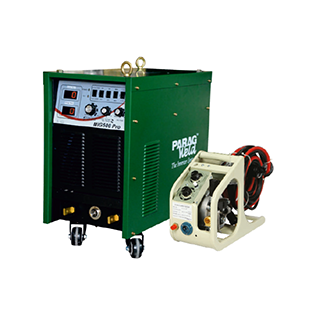
- Use a stable inverter MIG machine such as the Paragweld MIG 400 Pro with good copper-coated welding wire that feeds smoothly.
- Keep nozzles clean and replace contact tips when they wear.
Problem 3: Porosity (Pinholes) in the Weld
Where it shows up: anywhere the shielding gas is disturbed or the joint is dirty. Examples include open sheds with fans or drafts, dusty stone-processing units, and oily or painted steel.
Fix:
- Clean mill scale, oil and paint off the joint before welding.
- Screen MIG stations from fans and drafts. Where you cannot control drafts, use ARC welding instead.
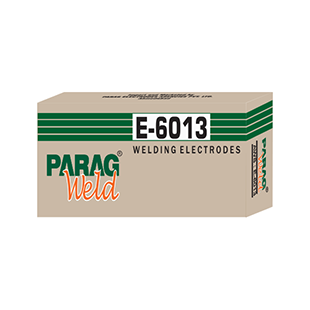
- Keep electrodes dry. A damp flux coating releases moisture into the weld pool.
- Check gas hoses and connections for leaks, and set the correct flow rate.
Machines That Help Solve These Problems
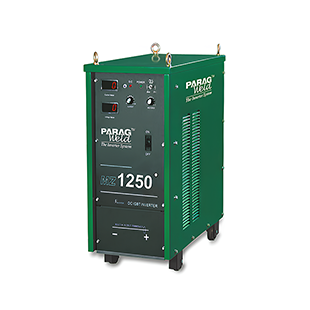
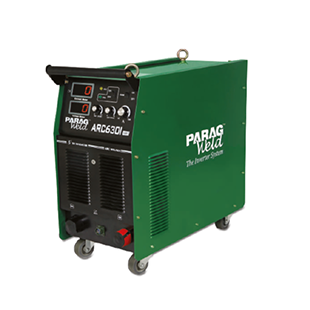
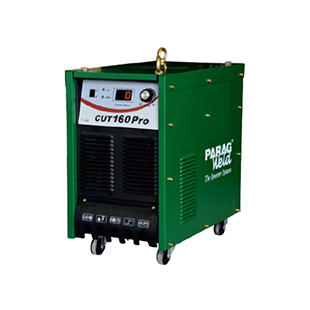
Each fix on this page depends on the right equipment. These Paragweld product lines cover the processes discussed here:
Problem 4: Cracking in Heavy Machinery Welds
Where it shows up: thick base frames, gang-saw structures, cutter-head mounts and other parts of marble and granite processing machines. These parts take constant vibration and shock, and cracks can form in the weld or right next to it.
Fix:
- Use low-hydrogen electrodes on thick, tightly restrained joints, and store them in a baking oven.
- Preheat thick sections and higher-carbon steels when the procedure calls for it, and do not cool welds quickly.
- Weld in several passes with full fusion, and grind out any crater cracks where a run stops.
- A heavy-duty inverter from the ARC welder series holds a stable arc with larger electrodes.
Problem 5: Machines Overheating in Summer
Where it shows up: Jaipur's hot, dusty summers push machines hard, especially in sheds with tin roofs. Machines trip on thermal overload and production stops.
Fix:
- Pick a machine whose duty cycle is well above what your working current needs, not one that runs at its limit.
- Place machines where air can circulate, away from walls and direct sun, and clean the dust out of them regularly.
- For long TIG or MIG runs at high current, add a water cooling unit for the torch.
Problem 6: Poor Fit-Up From Rough Cutting
Gas-cut or hand-cut edges leave gaps and slag that make every later step harder. An air plasma cutter makes cleaner, narrower cuts on mild steel, stainless steel and aluminium. For repeat parts, a CNC plasma system is the better choice.
Talk to Paragweld About a Welding Problem
If the same defect keeps costing your Jaipur workshop time, send our team a photo of the weld with the material, thickness and machine settings. We will suggest changes to technique, consumables or equipment, and we will only recommend a new Paragweld machine if you actually need one.
Call +91 9824099621 or email paragltd@yahoo.co.in, or reach us through our contact page.