Step 1: Get the Power Supply Right
Industrial welding machines work best on a stable 3-phase 415V supply. Give the welding bay its own distribution board with correctly rated breakers and earth-leakage protection, and a proper earth pit, not a shared earth. Size the incoming cable for all your machines running together, and use a separate socket for each machine instead of extension boards. For bridge and construction sites outside the city, where you depend on a generator, the generator must be rated generously for the welding load. An undersized generator causes an unstable arc and puts stress on the machine's electronics.
Step 2: Match the Duty Cycle to Your Shifts
Duty cycle tells you how many minutes out of ten a machine can weld at a given current before it has to cool down. Different kinds of Guwahati work put very different loads on a machine:
- Refinery shutdown work at the Noonmati refinery and similar plants often runs round the clock for days, so the machine must hold its current through long, continuous runs.
- Tea-processing machinery repair comes in seasonal peaks, when a breakdown in the middle of the season needs a quick fix.
- Bridge and structural fabrication involves heavy electrodes and long fillet welds on thick plate.
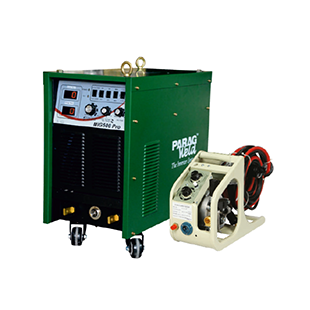
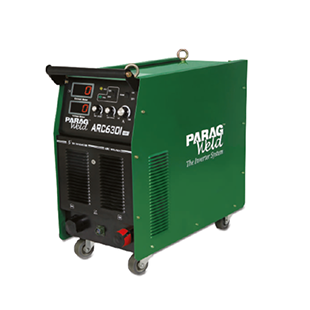
As a general rule, choose a machine whose rating is well above the current you normally use. For heavy MMA work, an industrial inverter such as the Paragweld ARC 630i gives that margin. For production MIG welding, the Paragweld MIG 500 Pro is designed for long shifts.
Step 3: Choose Electrodes and Wire for the Job
Structural steel and bridges
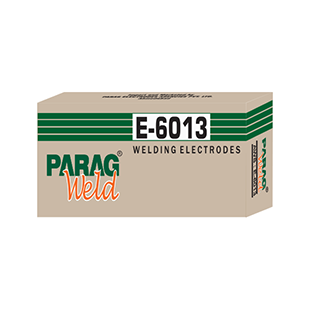
General-purpose rutile electrodes are fine for light structures. Low-hydrogen electrodes are the better choice for thick plate and load-bearing joints on girders and trusses. For MIG work on mild steel, a copper-coated solid wire is the usual choice.
Refinery piping and pressure parts
Pipe work usually needs a TIG root followed by MMA or TIG fill and cap passes, using consumables approved in the job's welding procedure. Always follow the specification issued by the plant.
Tea machinery and food-contact parts
Stainless-steel rollers, trays and chutes call for TIG welding with matching stainless filler so that the joints stay corrosion-resistant.
Storing consumables in a humid climate
Assam's long, heavy monsoon means electrodes pick up moisture quickly. Keep a drying oven for low-hydrogen electrodes, store wire spools in sealed covers and only take out what the shift will use.
Equipment for a Guwahati Welding Bay
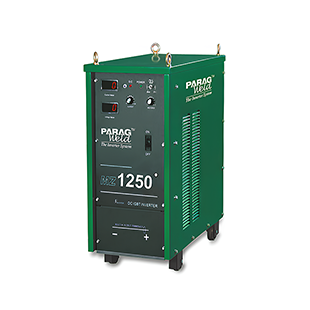
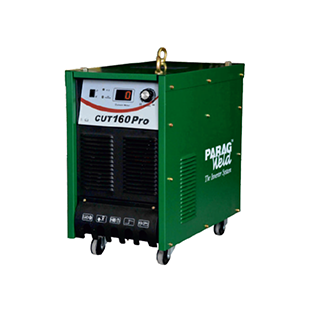
A well-equipped bay usually combines several of the following Paragweld product families, depending on the mix of work:
Step 4: Lay Out the Bay for Safety and Flow
Keep each welding station clear of flammable material, use welding screens between stations and provide fume extraction or good cross-ventilation. Put material racks, the cutting station and the welding stations in the order the work moves through the shop. If you fabricate tanks, vessels or pipes, a welding rotator lets the welder work in the flat position, which is faster and gives more consistent welds.
Step 5: Set a Routine Maintenance Schedule
- Daily: check cables, earth clamps and torch connections; clean MIG nozzles and replace worn contact tips.
- Weekly: blow dry, compressed air through the machine's cooling path; check that wire-feed rollers and liners are clean.
- Monthly: tighten terminal connections, check the gas regulators and hoses for leaks and inspect the input cables for heat damage.
- Before the monsoon: check the shed roof for leaks, raise machines off the floor and make sure your consumable storage is sealed.
Why Serviceability Matters So Far From the Factory
When the nearest replacement part may be a long way from Guwahati, it pays to choose machines with standard torches and consumables and to keep a small stock of wear parts: contact tips, nozzles, TIG collets and plasma electrodes and nozzles. Keep the machine's model and serial number handy so our team can quickly identify parts and troubleshoot by phone or WhatsApp. Browse the complete range on our products page.
Planning a new welding bay or upgrading an old one in Guwahati? Call us at +91 9824099621 or email paragltd@yahoo.co.in and we will help you choose the right equipment for your work.